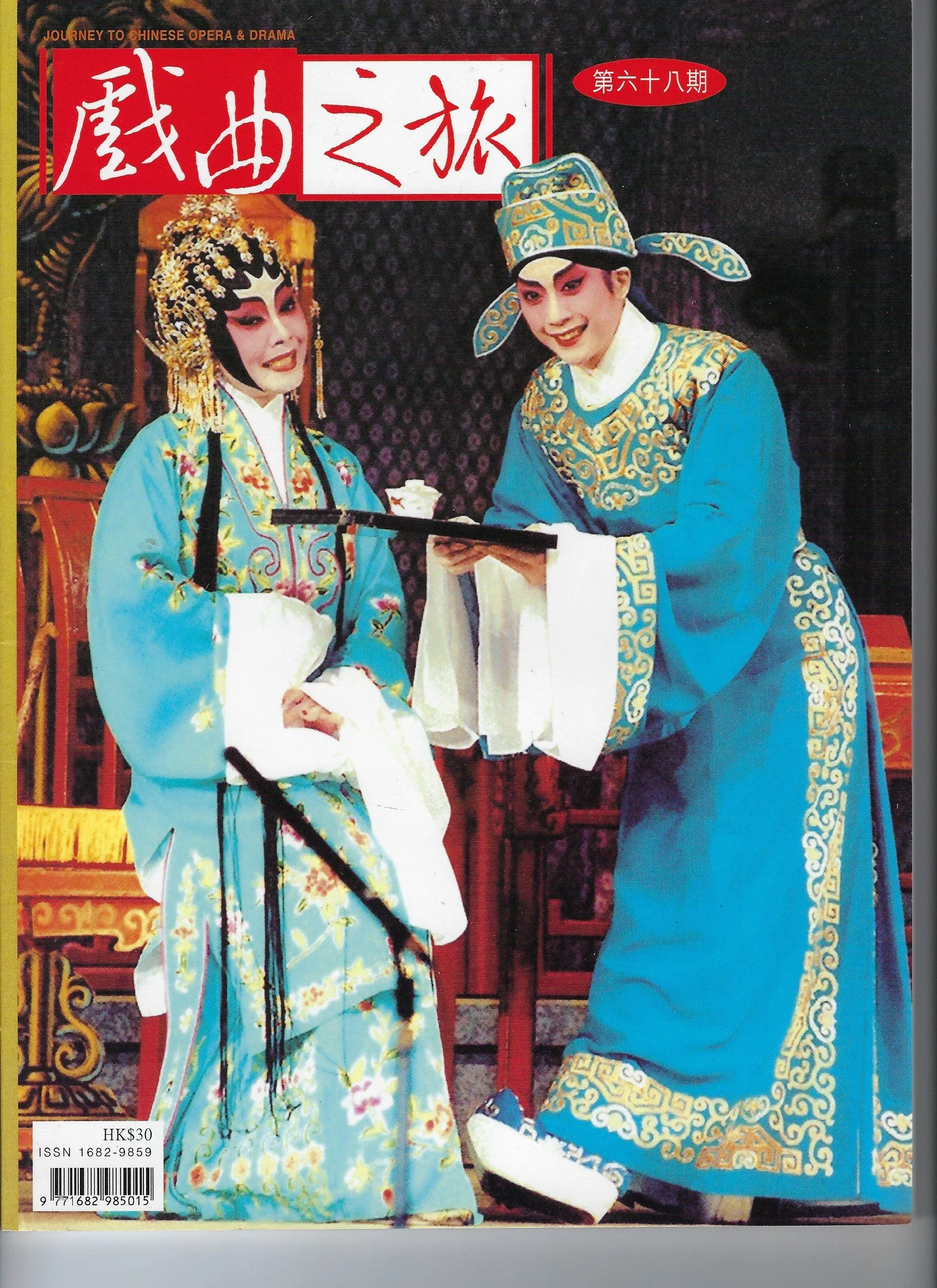
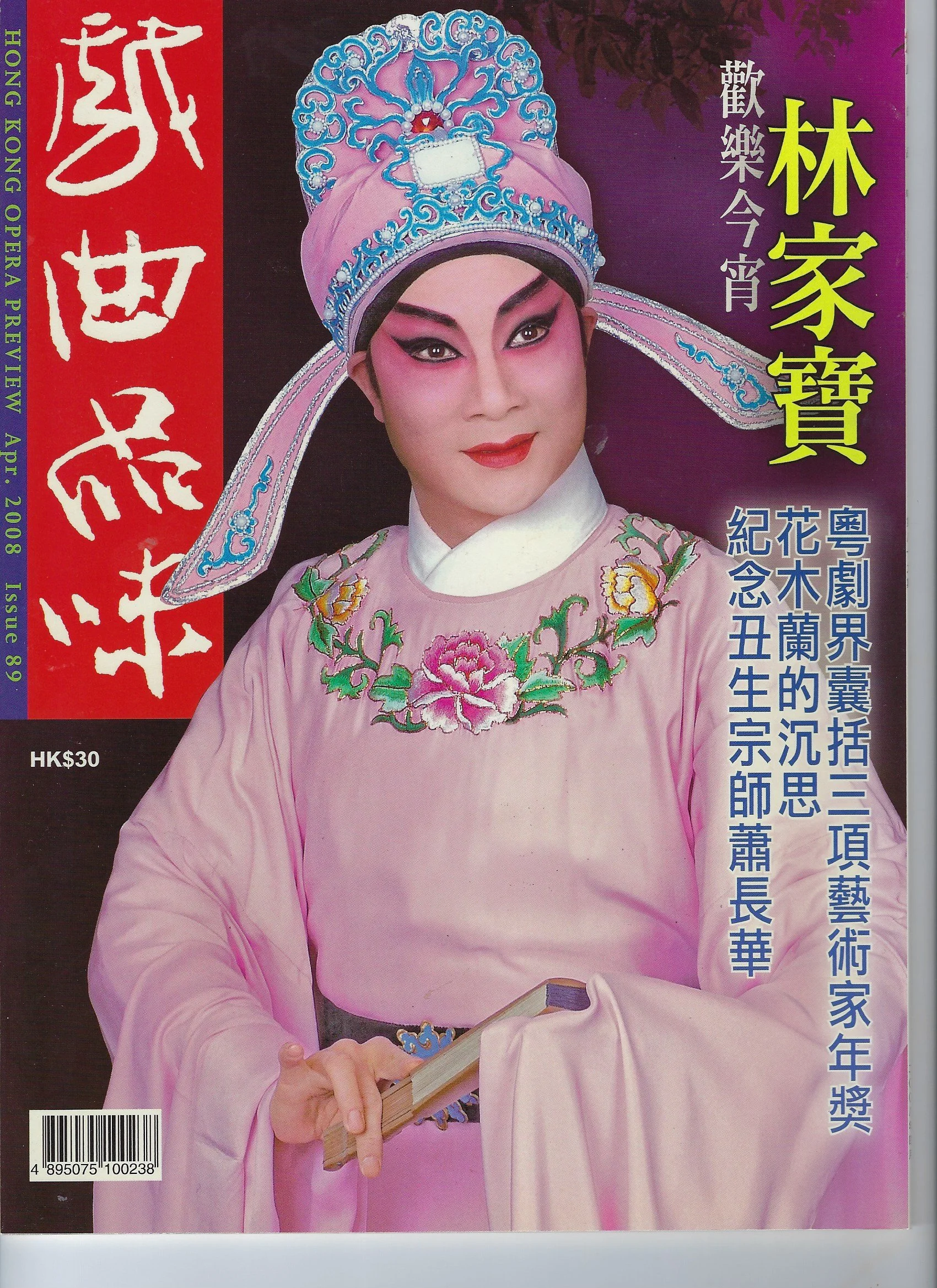
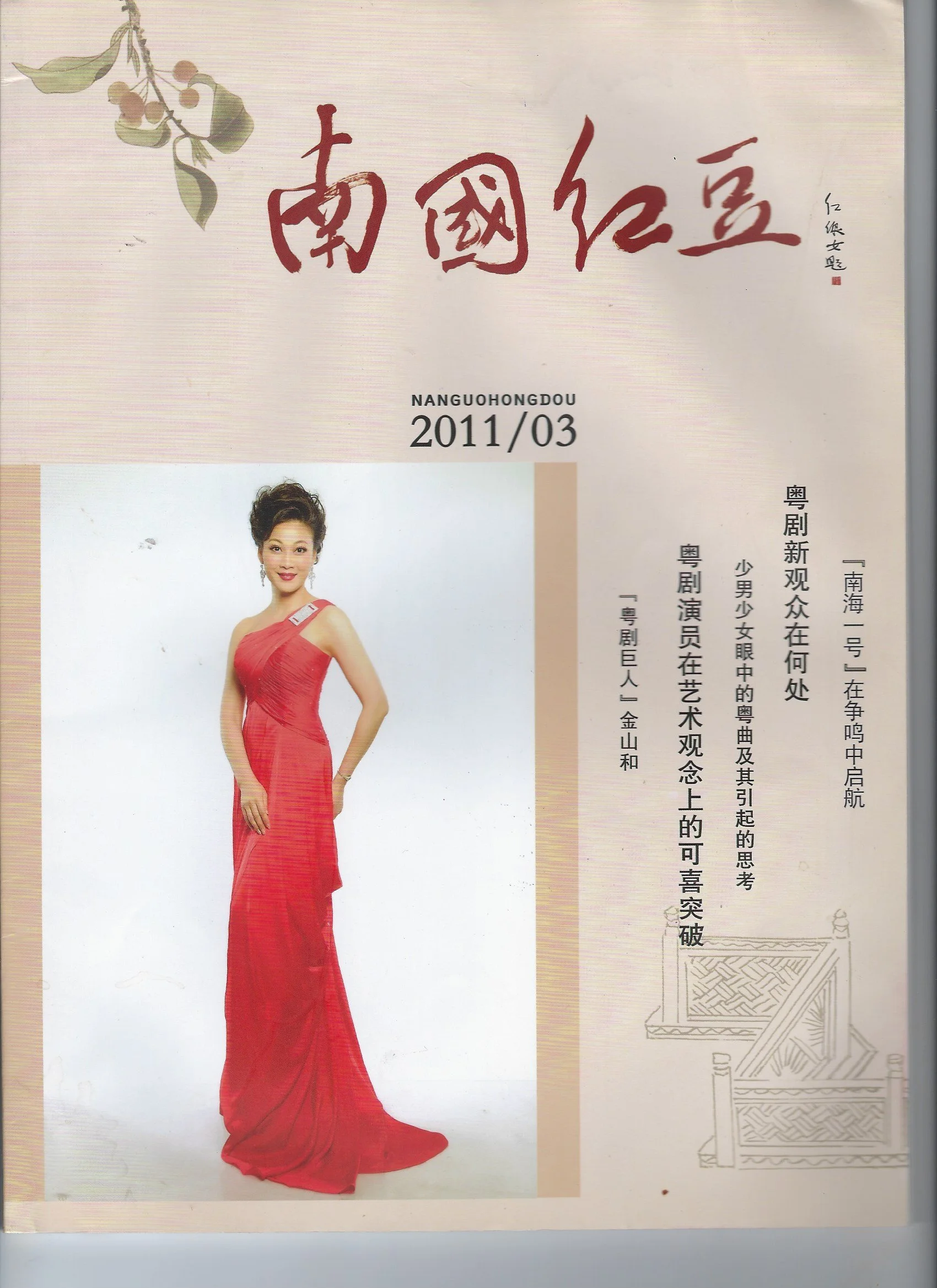
Gold Mountain Woh was a Cantonese opera young scholar role actor. Over the course of his life, he traveled to America three times. In 1889, he crossed the Pacific for the first time to perform in Gold Mountain—San Francisco—where he was warmly received by the Chinese community and honored as the “Grand Master of Gold Mountain.”
After returning to China, he devoted himself to training younger performers. In Hong Kong, his peers praised him as the “Treasure of the Baat Wo Association.”
Published on :
Journey to Chinese Opera & Drama, Issue 68. December 2007
Hong Kong Opera Preview, Issue 89, April 2008
Nanguohongdou, Guangzhou, 2011/03

金山和 Gold Mountain Woh (1865-1964)
發表於:
2007年12月香港(戲曲之旅)68期
2008年4月香港(戲曲品味)89期
2011年3月廣州 (南國紅豆)
發表於:
2008年5月香港(戲曲之旅)73期
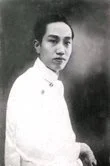
林超群 Lam Chiu -kwan (1906-1955)
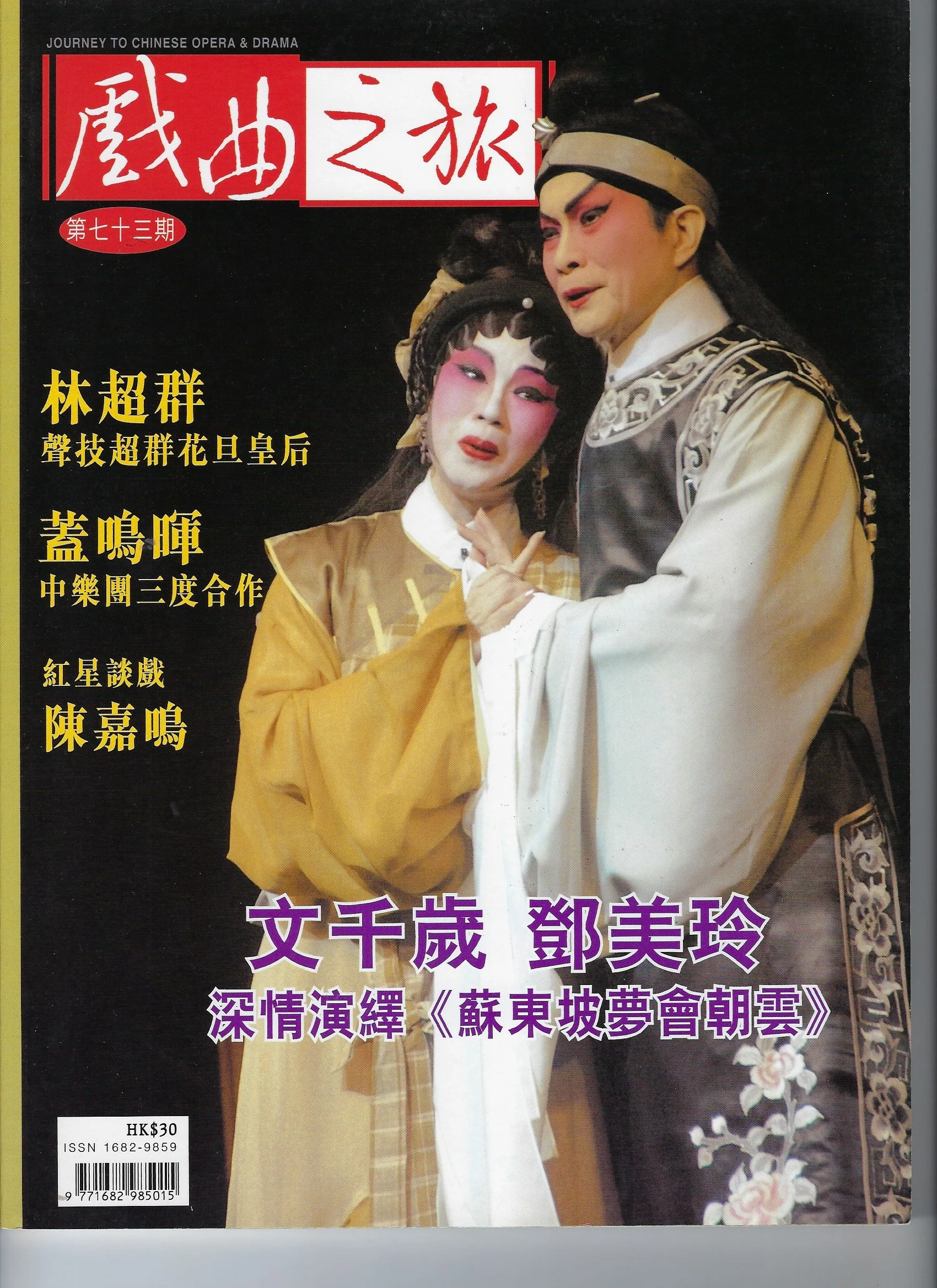
In the late Qing and early Republican period, Cantonese opera performances were presented by all-male troupes, and female roles were performed by male actors in cross-gender roles. At that time, many famous male fa-daan performers emerged.
On stage, most male fa-daan were able to portray feminine grace and charm to perfection. Lam Chiu-kwan was one of the most outstanding among them. He was once a leading and celebrated fa-daan, praised as the “Queen of fa-daan with extraordinary voice and technique.” Yet, because of changing times, he faded from the Cantonese opera stage along with the profession of the male fa-daan itself.
Published on :
Journey to Chinese Opera & Drama, Issue 73. May 2008

黃超武 Wong Chiu Mo (1914-1993)
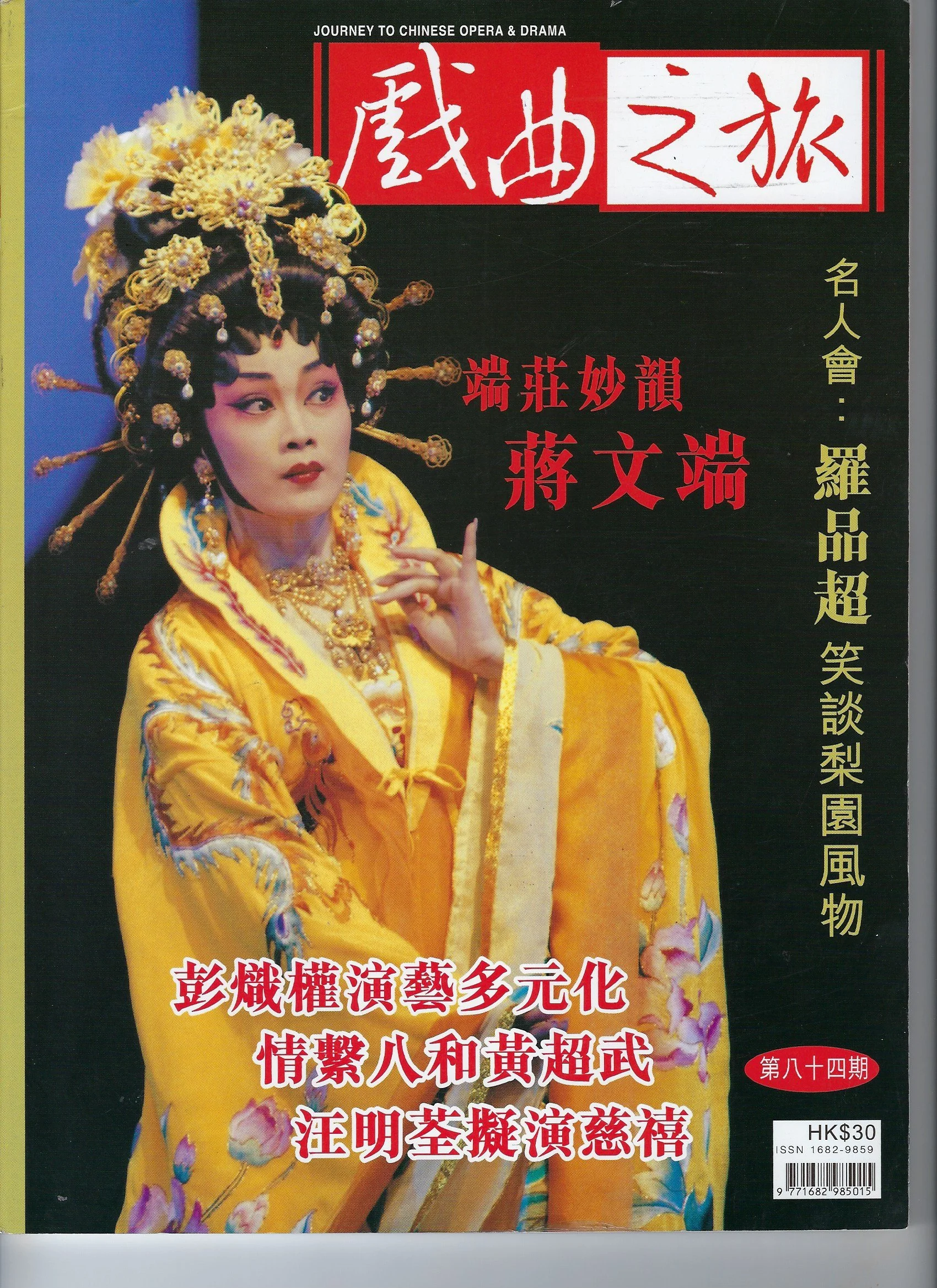
Mr. Wong Chiu Mo was a renowned opera artist. One of the very first film actors in the history of Chinese cinema in the Bay areas. He was the founder of the Baht Wor Cantonese Opera Association in San Francisco.
Published on on :
Journey to Chinese Opera & Drama, Issue 84. April 2009
發表於:
2009年4月香港(戲曲之旅)84期
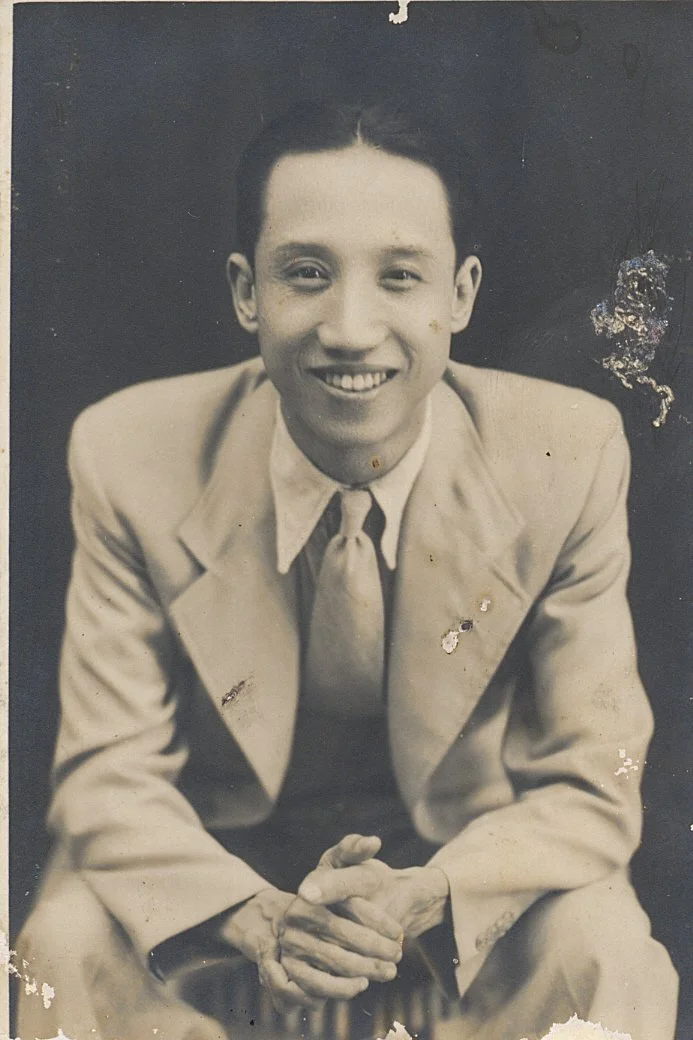
白玉堂 Baak Yuk-tong (1901-1995)
發表於:
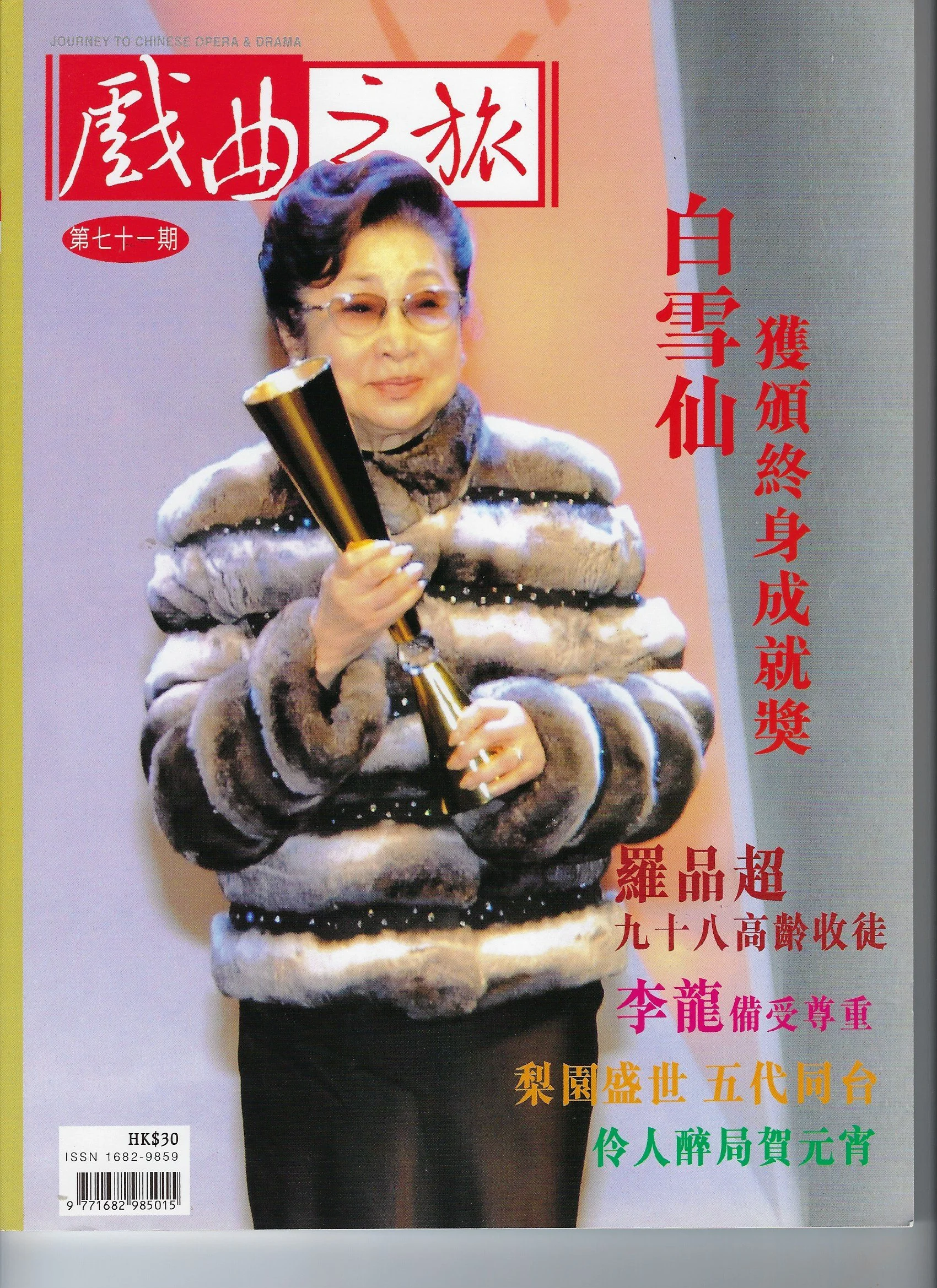
2008年3月香港(戲曲之旅)71期
The most unforgettable conversation for me that evening was when Mr. Baak Yuk -Tong told me about his method of vocal training. Every day, just as dawn was breaking, he would run up to a hillside and project his voice toward the hill opposite, practicing his vocal projection—what Cantonese opera performers call diu sang ji (吊嗓子). Someone would stand on the other side and listen to see whether his voice was loud and strong enough. Throughout his performing career, he practiced this way every single day, without interruption.
Published on:
Journey to Chinese Opera & Drama, March 2008. Issue 71
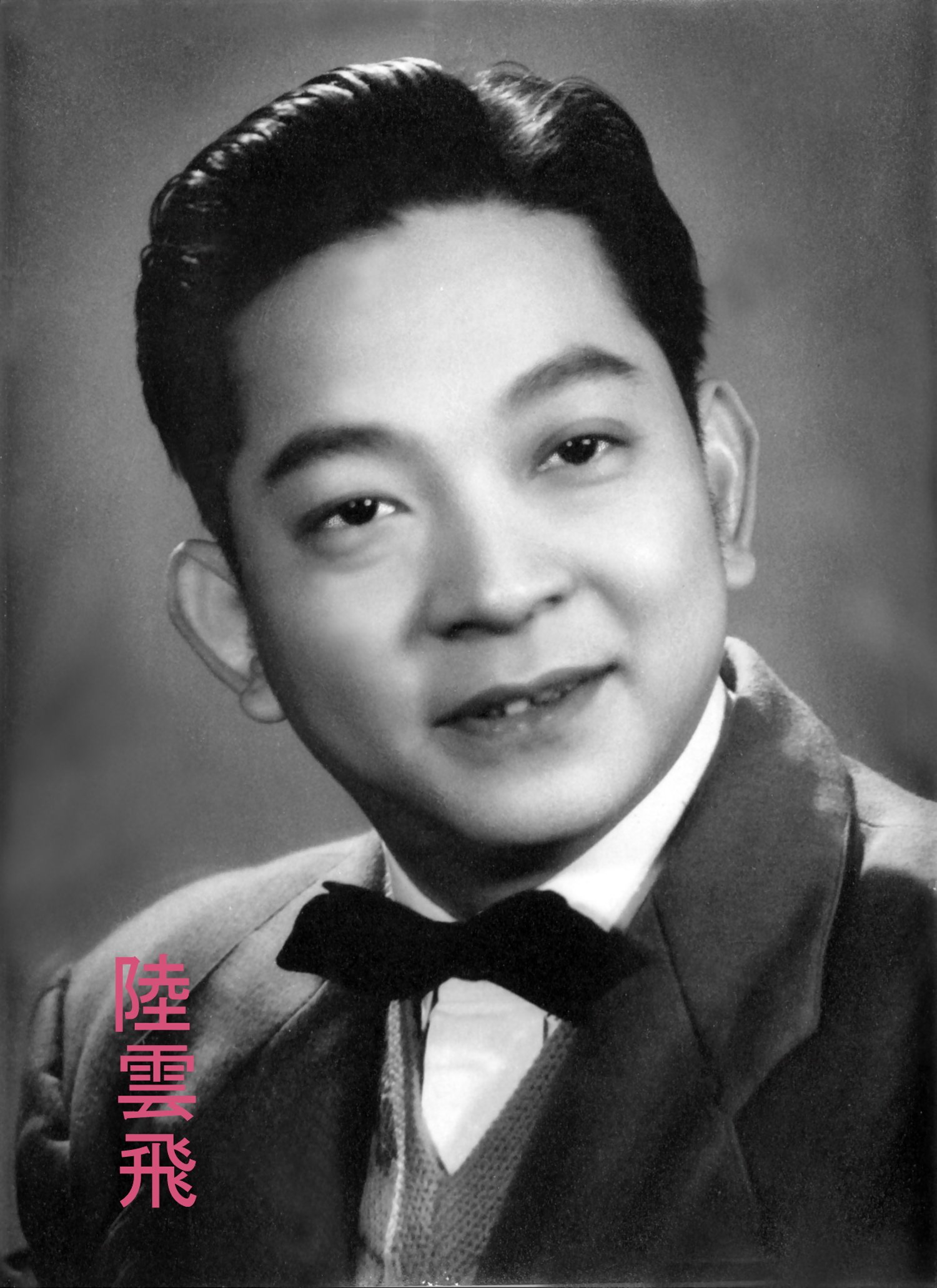
陸雲飛 Luk Wan-fei(1914-1968)
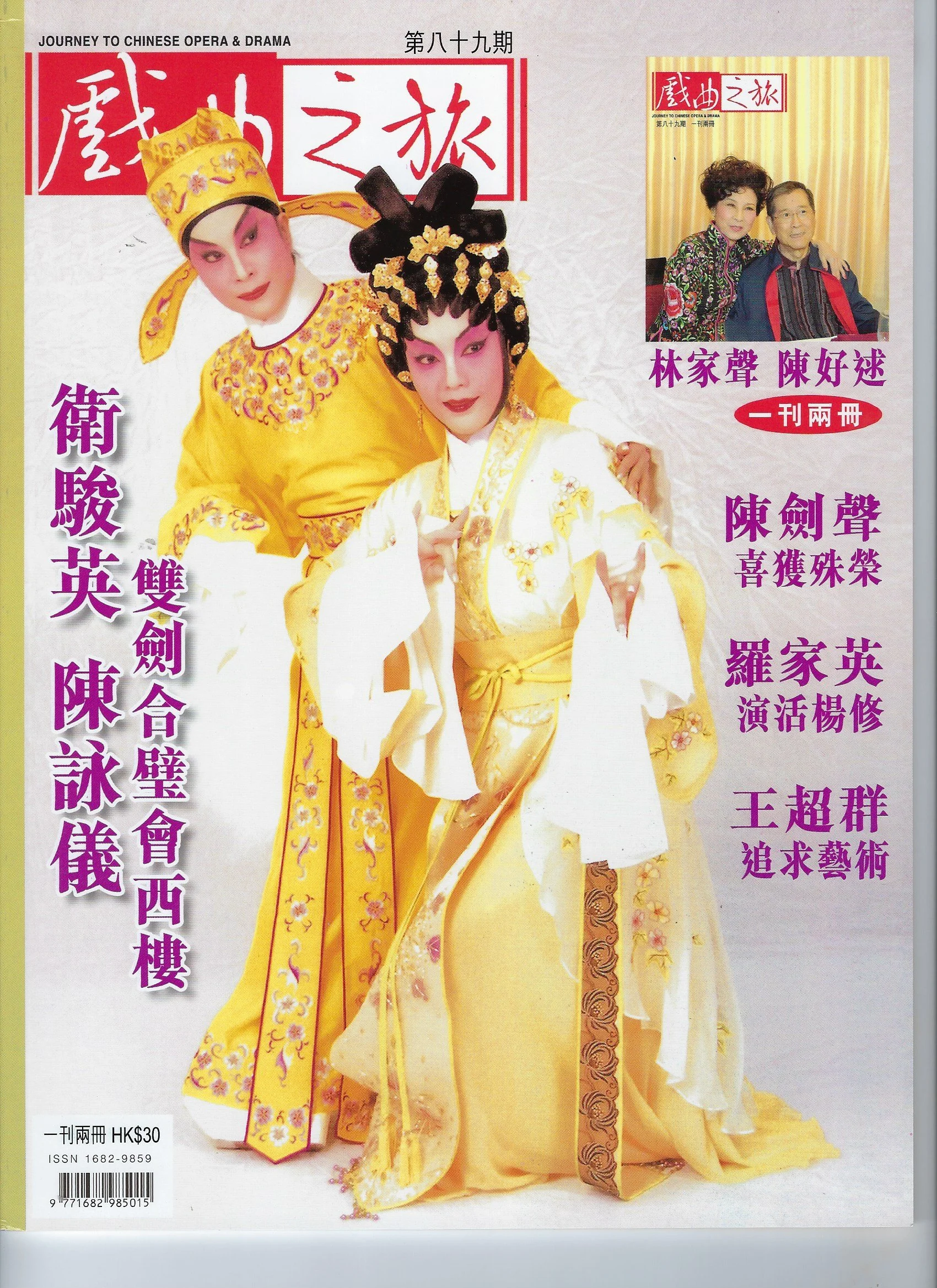
發表於:
2009年9月香港(戲曲之旅)89期
The Three Treasures was his finest representative work. In this opera, he brought his uniquely distinctive singing style to its fullest expression.
On stage, Luk Wan-fei delighted audiences with his special comic technique of appearing innocently muddled and blank-faced, bringing them endless laughter. In daily life, he was also a gifted storyteller and joker; with just a few words, he could make people double over with laughter. His friends all called him a true “bundle of joy.”
Such a gifted master of comedy lived through an extraordinary era. His dramatic life left behind countless amusing anecdotes, but also a touch of helplessness and regret.
Published on :
Journey to Chinese Opera & Drama Sept. 2009. Issue 89
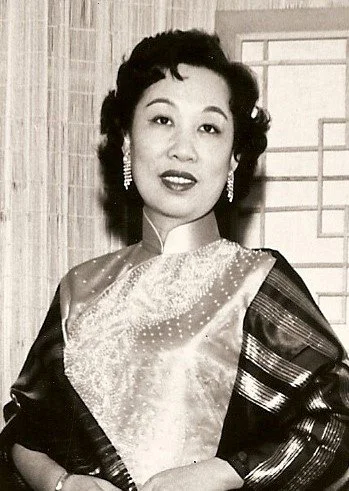
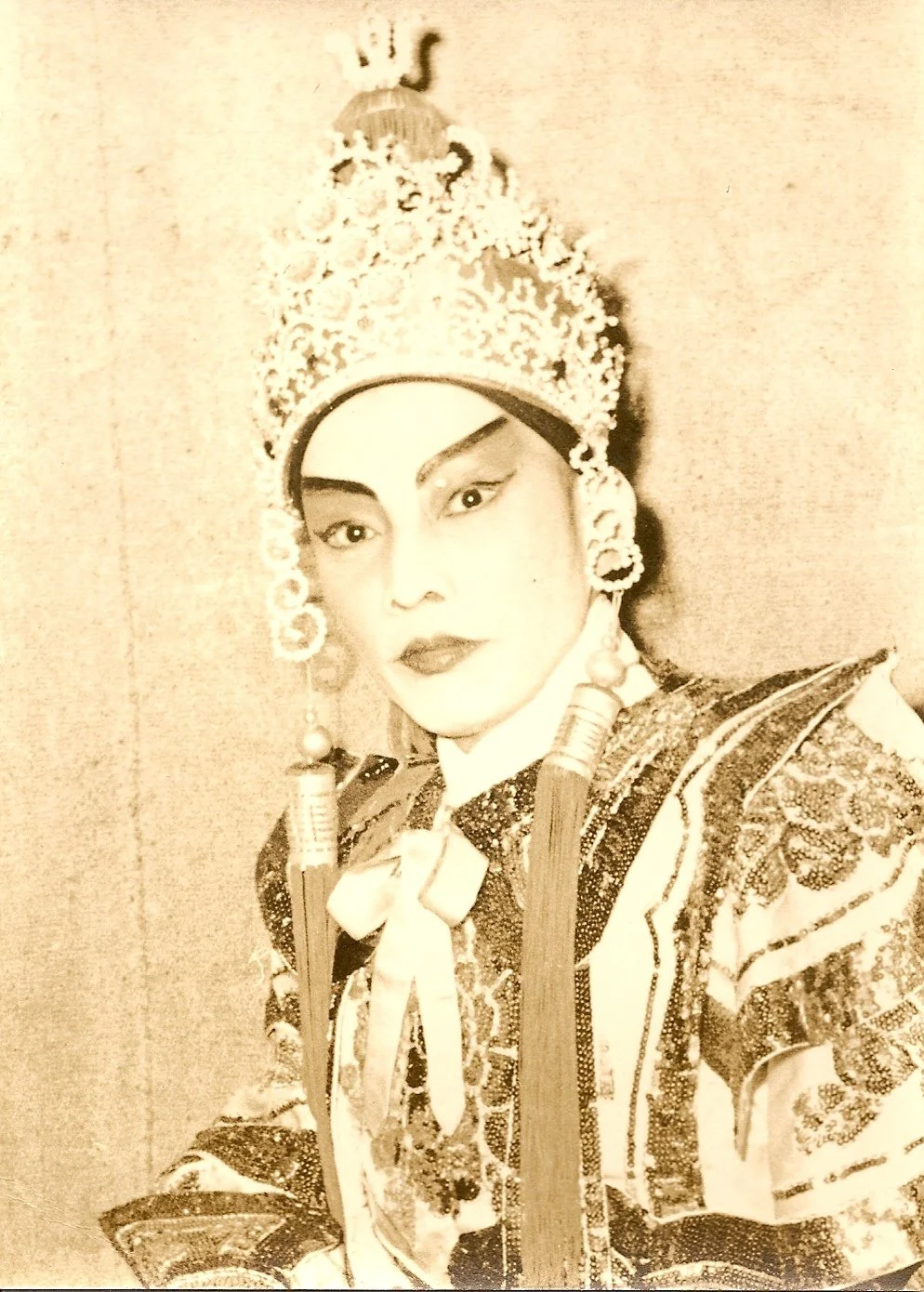
陳艷儂 Chan Yim-nung
(1919-2002)
Flying High Phoenix 沖天鳳
(1917-1954)
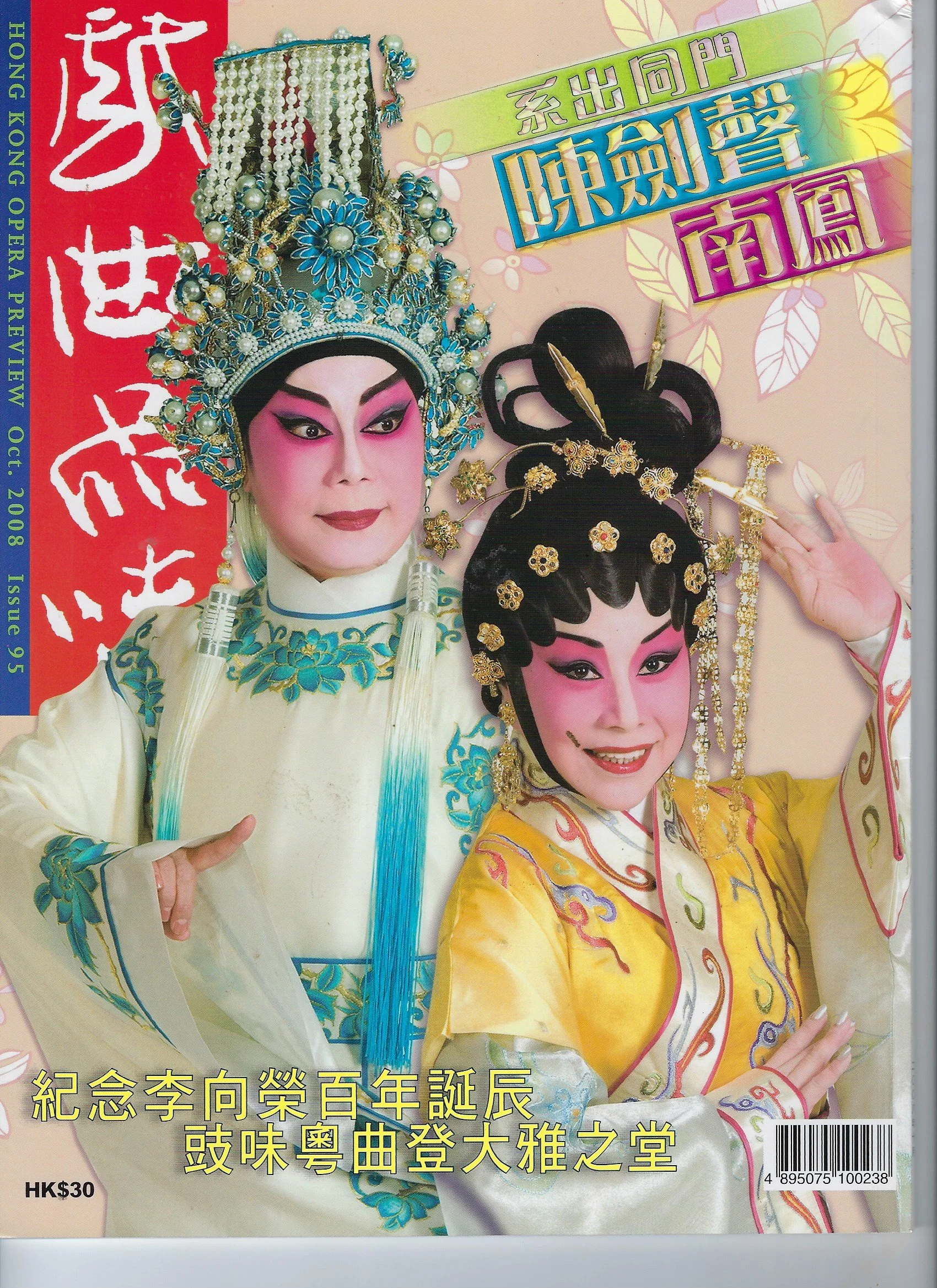
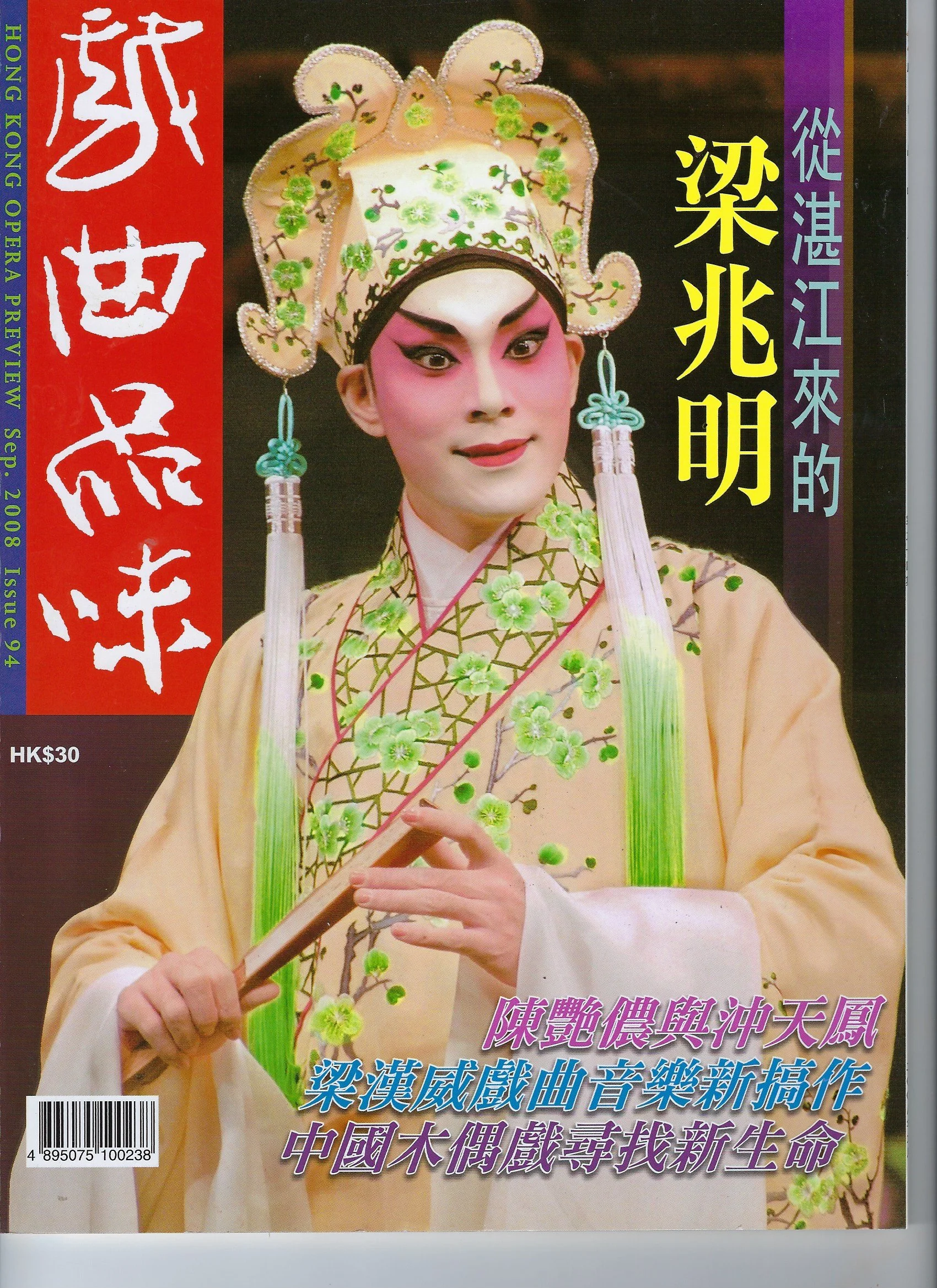
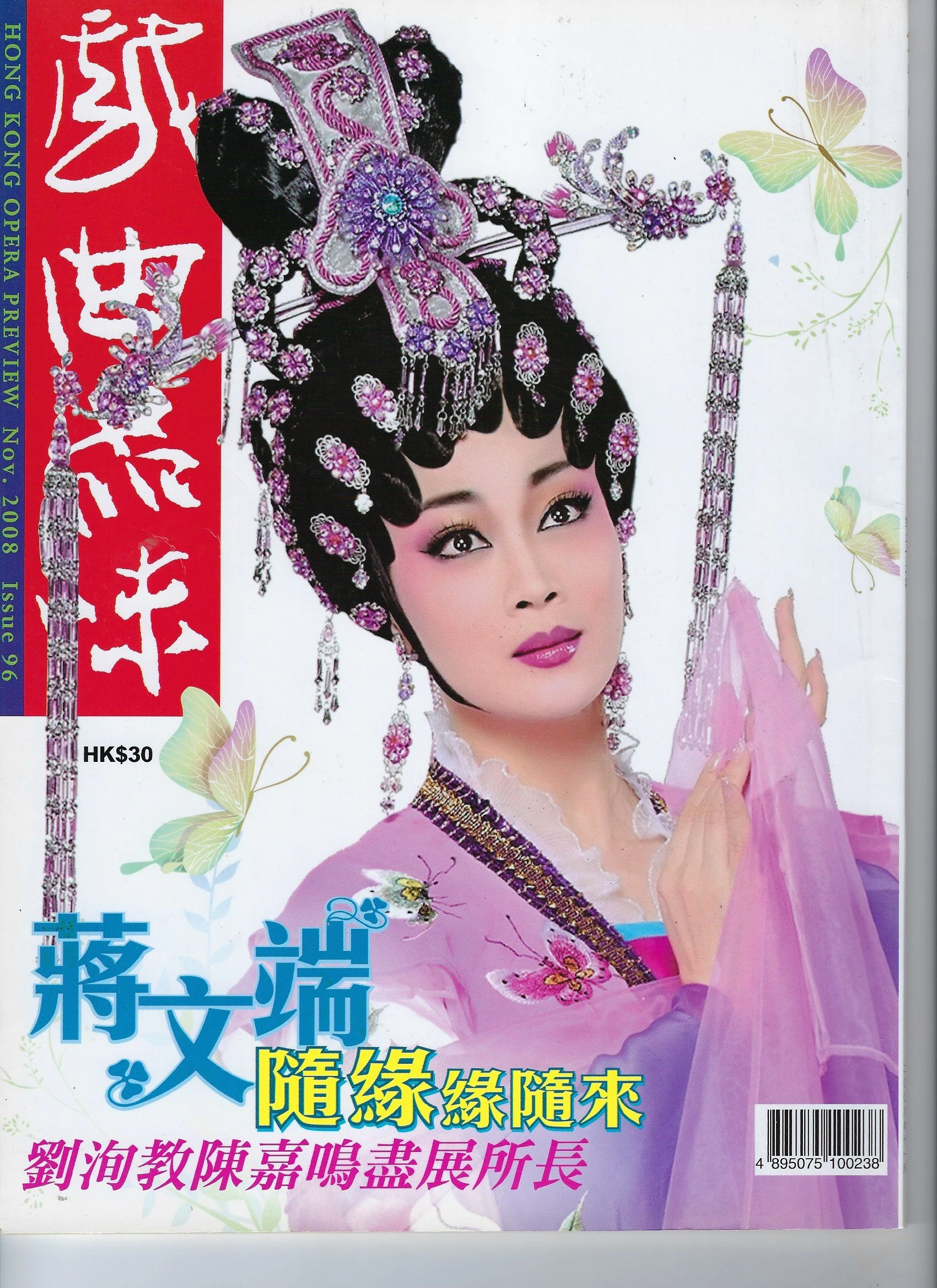
發表於:
2008年9月香港(戲曲品味) 94期
2008年10月香港(戲曲品味) 95期
2008年11月香港(戲曲品味) 96期
Chan Yim-nung was a celebrated female-role performer in Cantonese opera. With three astonishing special skills—Performing on clay pots, performing on bound-foot stilts, and the stage technique of pushing a cart—she rose to prominence in Southeast Asia. She established herself in the Cantonese opera circles of Guangzhou, Hong Kong, and Macau, where she shone brightly. She settled in Gold Mountain—San Francisco—to display the remaining radiance of her art.
Throughout more than eighty years of life, she remained devoted to Cantonese opera and never left it behind. She was also blessed with a good husband: the Cantonese opera male lead and martial performer, Flying High Phoenix.
Published on:
Hong Kong Opera Preview, Sept. 2005 Issue 94
Hong Kong Opera Preview, Oct.. 2005 Issue 95
Hong Kong Opera Preview, Nov. 2008 Issue 96
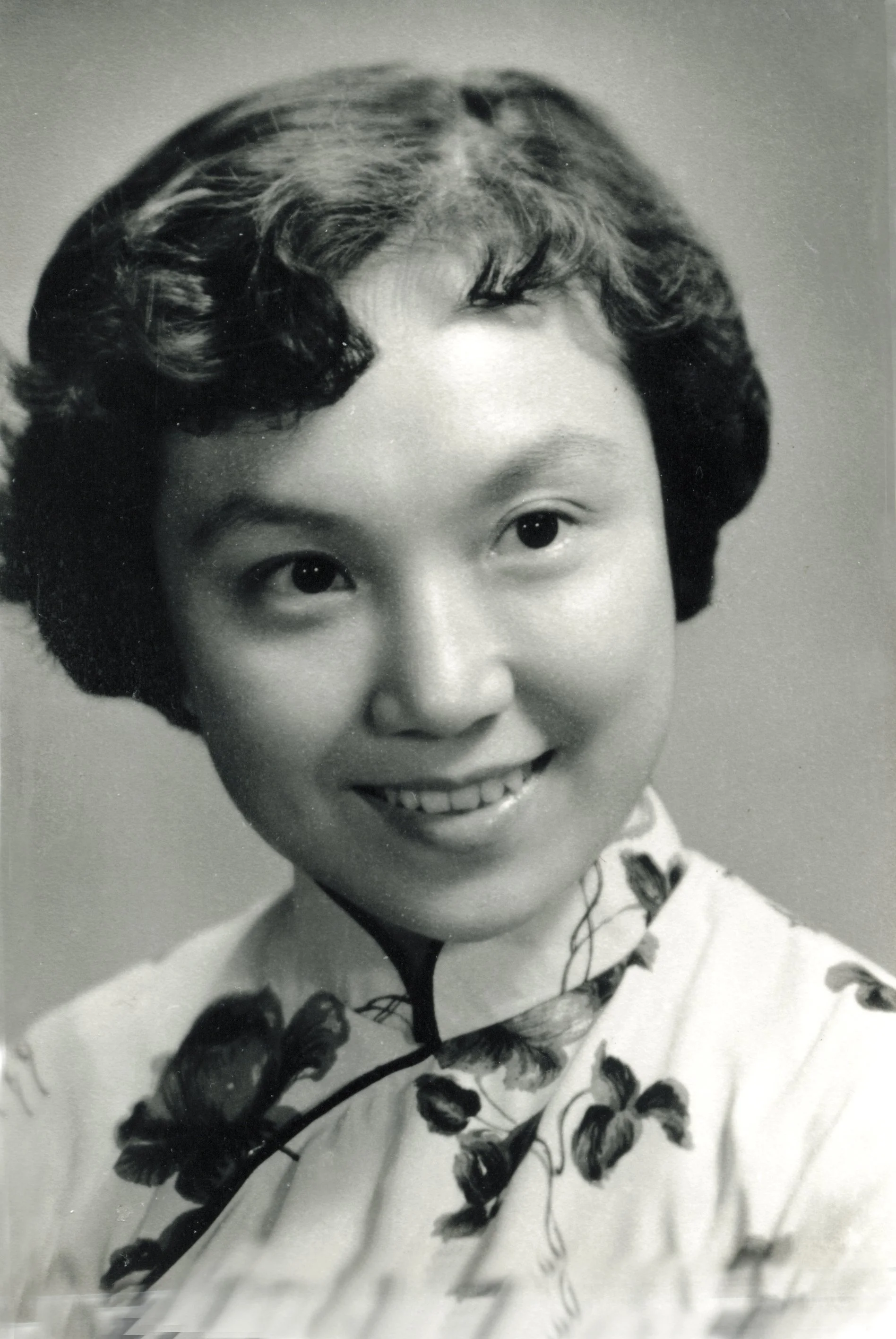
Lam Siu-kwan 林小群
(1932- )
發表於:
2010年4月香港(戲曲之旅)96期
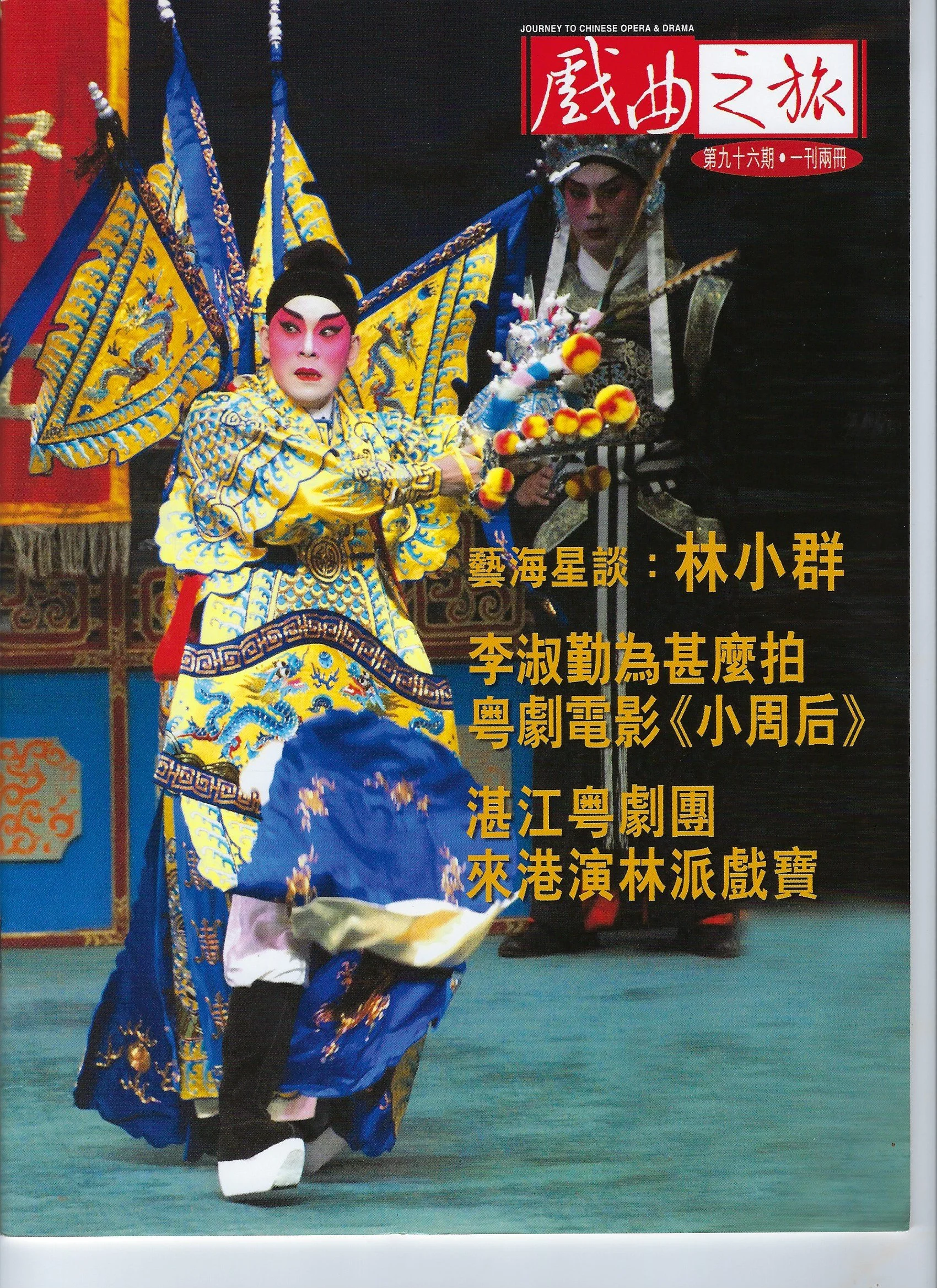
Lam Siu-kwan was a renowned Cantonese opera performing artist who came of age in New China. She was the leading fa-daan of the southern Chinese opera stage in the 1950s.
Her singing voice was sweet, mellow, and bright, like pearls falling onto a jade plate. On stage, she excelled in portraying dignified and refined young gentlewoman roles. Her delicate yet composed facial expressions and acting technique won the admiration and affection of countless audiences.
Lam devoted her entire life to Cantonese opera. Over a performing career that lasted more than half a century, she lived through the Sino-Japanese War, the establishment of Communist China, countless political campaigns, and the Cultural Revolution. Yet her standing as a leading fa-daan in the Cantonese opera world remained firm and unshaken.
She was like a radiant pearl, shining brilliantly over the southern Chinese stage.
Published on :
Hong Kong Journey to Chinese Opera & Drama, April 2010, issue 96
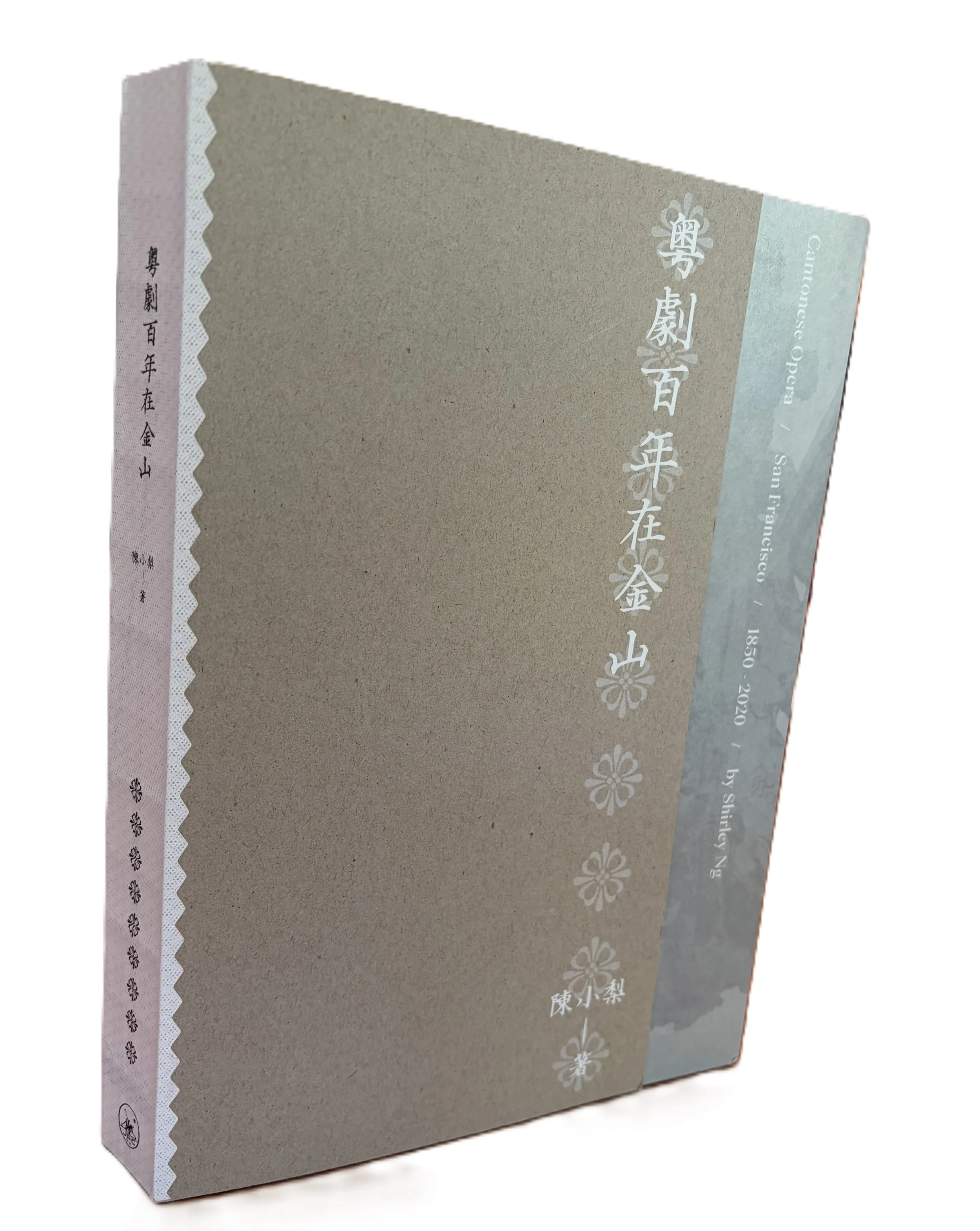
香港三聯書店有限公司
2023年三月出版
Through more than 400 historical images, this book chronologically documents the development of Cantonese opera in North America over the past century. It also serves as a compact historical archive of Cantonese opera.
Published by Joint Publishing (H.K.) Co. Ltd.
March, 2023